OP 10
Context
Strato is a concept I scoped and built myself — the brief a real CNC-plant owner would give. He wants three things at once: operators who can run and recover their own machines, managers who can read the floor’s real status and output at a glance, and a service team that can support both without flying blind. So I designed the product, not screens — the roles, the information architecture, the data model, and a front-end you can actually click through. No client scoped it, which is the point: I defined it and built it.
Everything on screen is running code; the plant is a fiction, held consistent. I was solo on both design and front-end. The machines, the shifts, and the data are simulated — but they are simulated once, in one model, and every view reads from it. Where the boundary sits is stated, not hidden.
OP 20
Problem
A plant has no single user — it has three, standing in different places with opposite needs. The operator needs one machine, one task, one obvious next action, mid-shift with their hands full. The manager needs the reverse: the whole fleet at a glance, exceptions surfaced first. Build one interface for “everyone” and it serves no one.
Underneath sits trust. Industrial software loses the room the moment a number looks invented or an AI suggestion reads like a guess — so everything Strato showed had to be internally consistent and honest about what it knew.
OP 30
Process
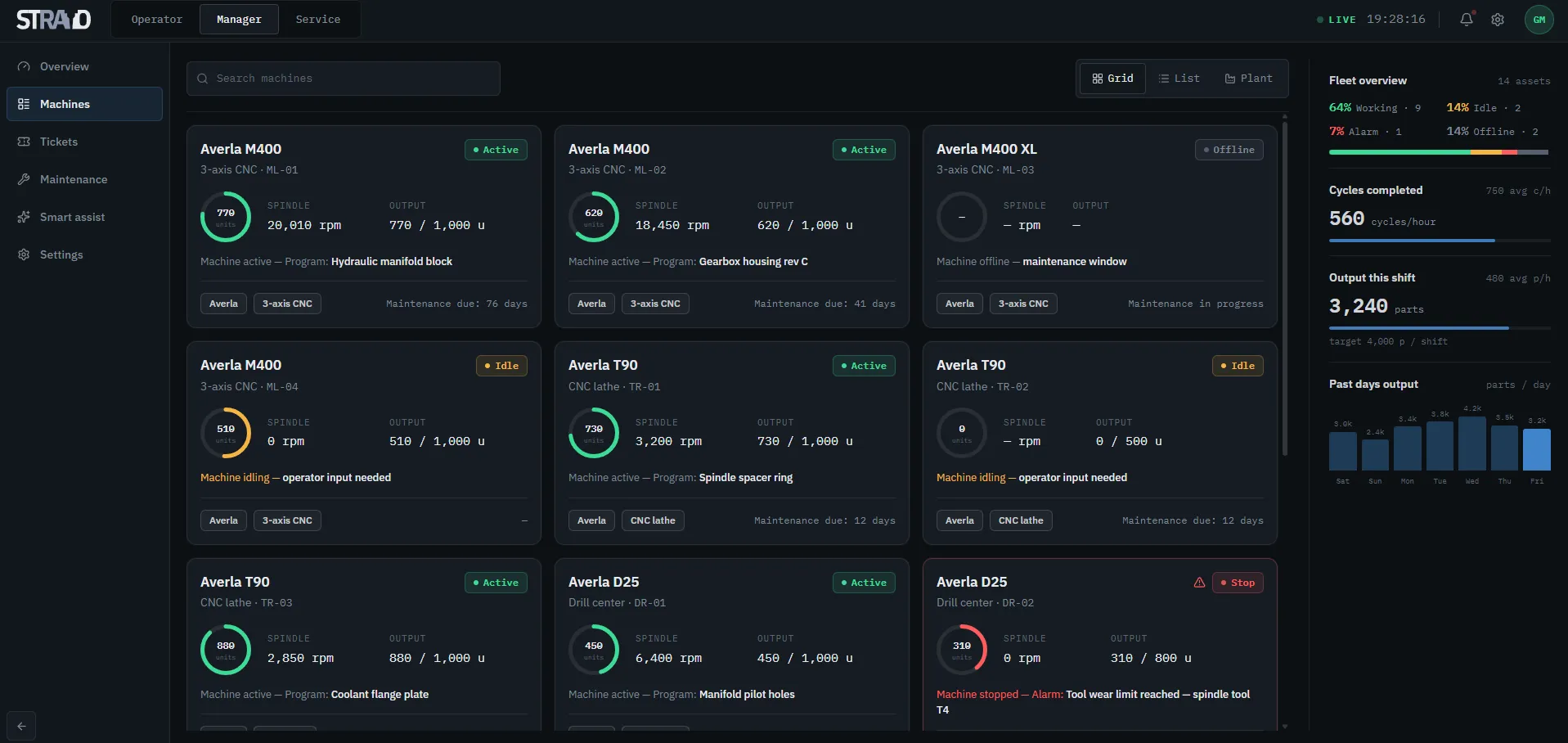
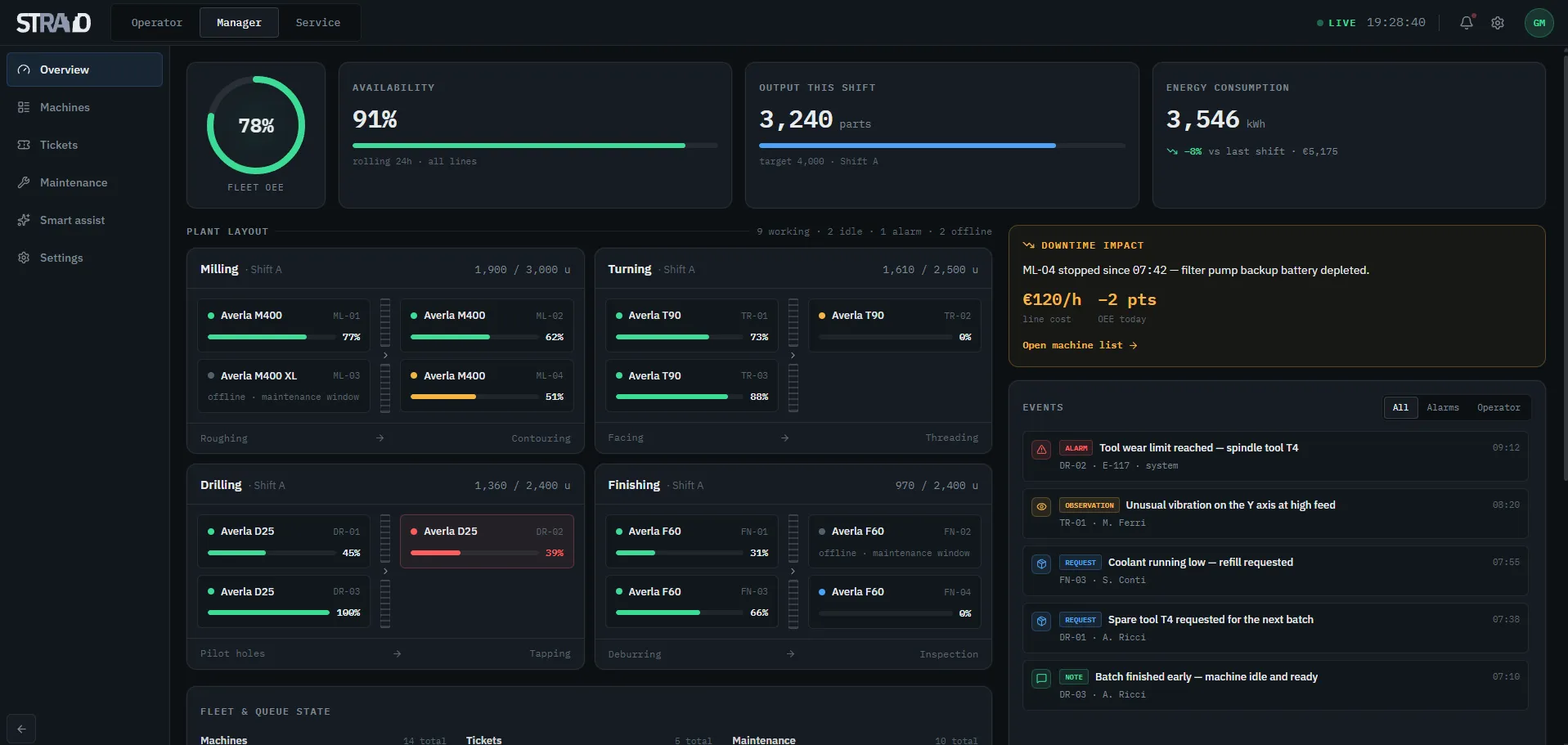
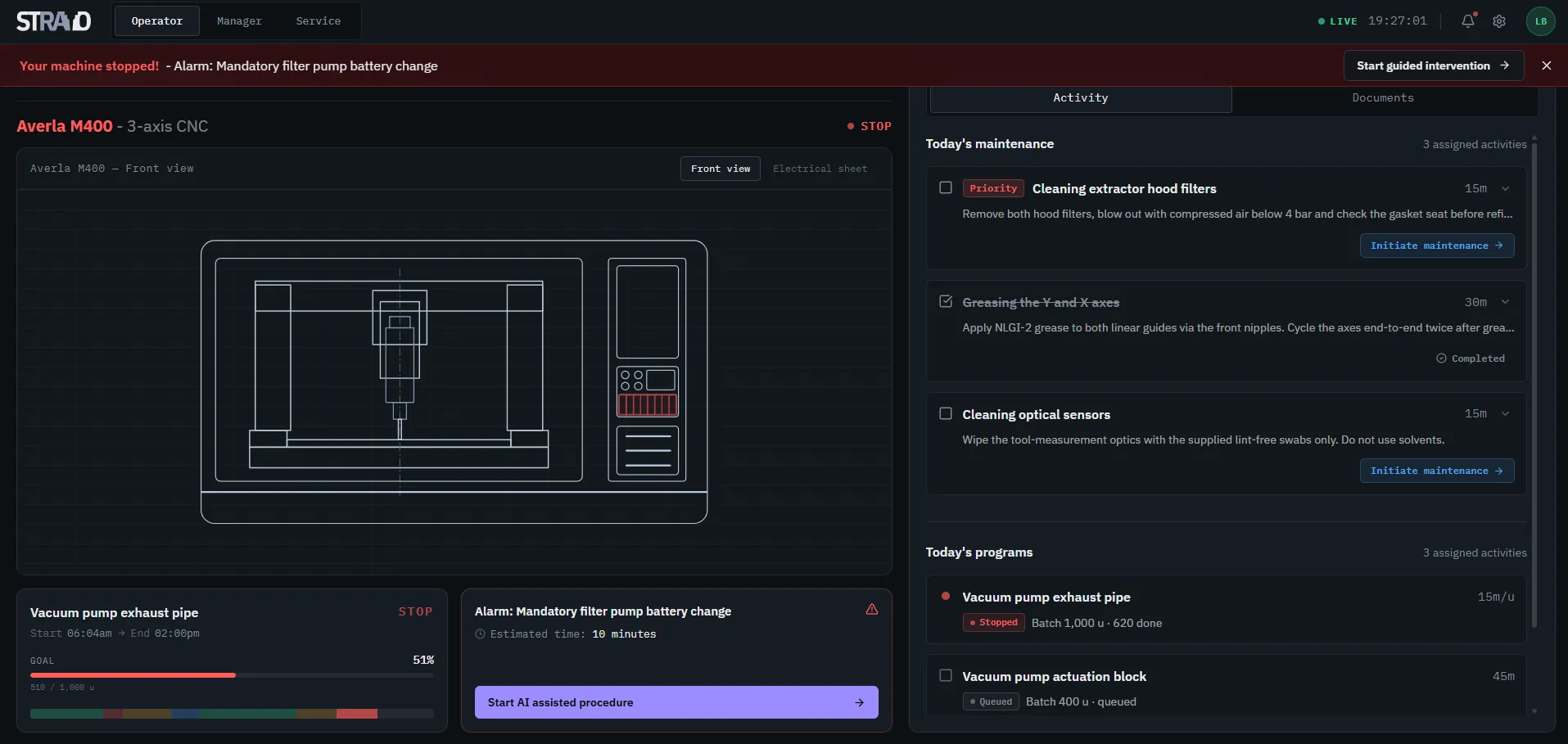
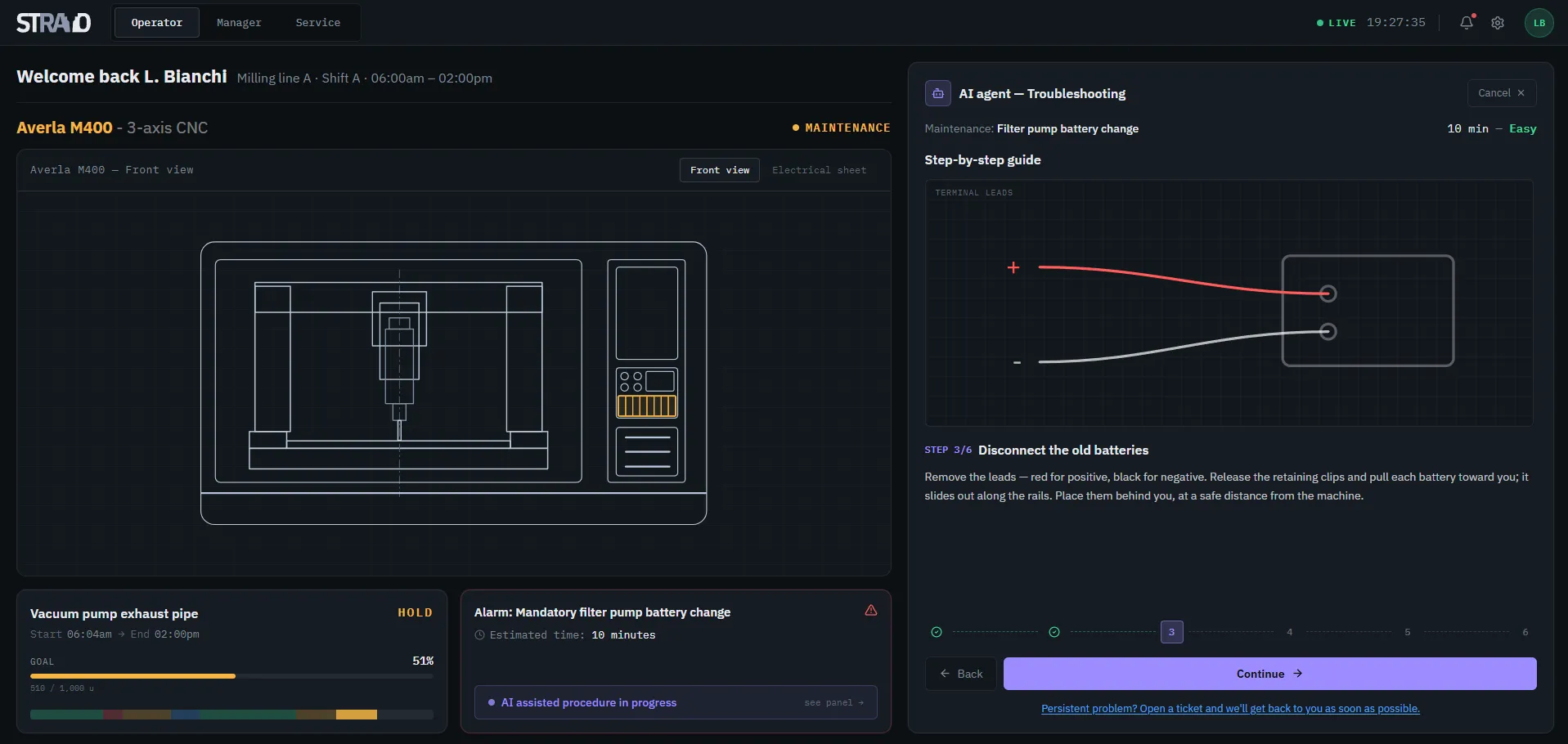
Split by who’s standing there, not by feature. The operator view drops the sidebar and puts one machine on screen as its own electrical drawing — with its live program, its alarm, and a single primary action. The manager view is the inverse: the whole fleet as status pills, program completion, and units-per-shift, exceptions first.
One event drives the whole app. A single alarm — a machine down on a filter-pump battery — runs end to end: the operator works an AI-guided, six-step repair, and the fleet counts, shift timeline, and every status pill update live from alarm to repair to resolved. State is modelled once and projected everywhere, so it behaves like a system, not a slideshow.
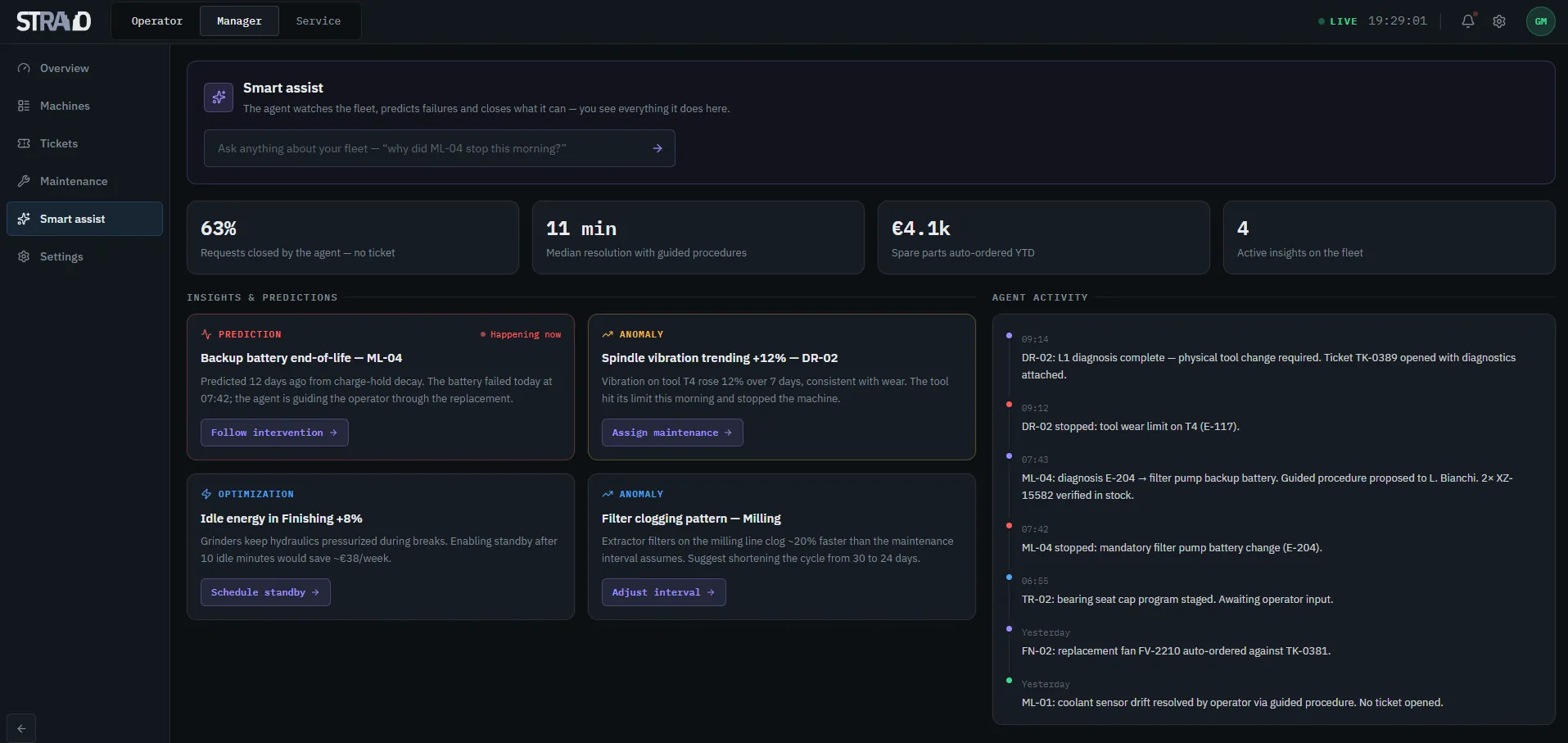
Service is the last resort, by design. The diagnostic flow runs machine → agent → operator, and only on escalation does it reach service — with the ticket opening pre-filled with everything already tried. After-sales support drowns in interventions the operator could have handled with a guide; Strato’s job is to shrink service’s queue to the problems that deserve a human.
AI as a procedure, not a personality. The guided repair won’t pass step one until the operator confirms the spare parts are in hand, and everything the agent touches wears one reserved colour — a suggestion is never mistaken for a fact. Where a wrong move stops a line, that restraint is the design.
Numbers held to plant reality. Every count derives from one fleet source at render time, plant-level aggregates never mix with the customer’s fourteen machines, and invented figures were rescaled to what a floor would actually see.
OP 40
Outcome
Strato is a working product demo you can open right now — not a shipped product, and as a portfolio piece that’s exactly its value. It’s the whole job in one artifact: roles, information architecture, a consistent design system, live state, and a restrained use of AI in a safety context — evidence I can carry an ambiguous industrial brief from nothing to something buildable, solo.
What it hasn’t had is a real operator’s hands. The next move is precisely that: put the guided-repair flow in front of people on a floor and let their friction, not my assumptions, drive the next revision.